
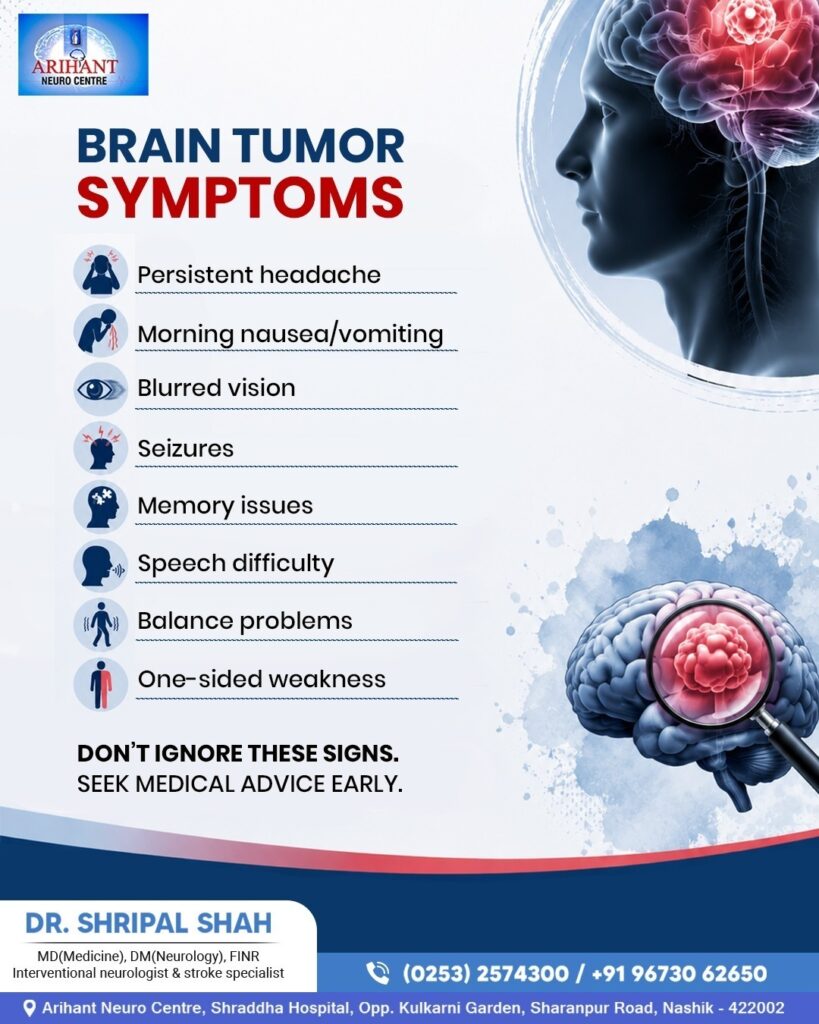
Headaches, vision problems, memory disturbances, or unexplained seizures are symptoms that many people tend to dismiss or attribute to stress and fatigue. However, when these symptoms become persistent or progressively worsen, they may indicate an underlying neurological condition. Recognizing the Brain Tumor Symptoms at an early stage can significantly improve treatment outcomes and quality of life.
A brain tumor is an abnormal growth of cells within or around the brain. Tumors can be benign (non-cancerous) or malignant (cancerous), but both types may affect normal brain function by increasing pressure inside the skull or damaging surrounding brain tissue. Early diagnosis and timely medical intervention play a crucial role in preserving neurological function and preventing serious complications.
What is a Brain Tumor?
A brain tumor develops when abnormal cells multiply uncontrollably in the brain. Some tumors originate within the brain itself, known as primary brain tumors, while others spread from cancers in different parts of the body and are called metastatic brain tumors.
Brain tumors vary widely in size, growth rate, and severity. Some grow slowly over many years, whereas others progress rapidly and require immediate treatment.
Common Brain Tumor Symptoms
Symptoms depend on the location, size, and growth pattern of the tumor. Since different parts of the brain control specific bodily functions, symptoms may differ from person to person.
1. Persistent Headache
One of the most frequently reported symptoms is a headache that gradually becomes more severe over time.
Warning signs include:
- Headaches that occur daily
- Pain that worsens in the morning
- Headaches associated with vomiting
- Limited relief from pain medications
Unlike ordinary headaches, brain tumor-related headaches tend to increase in intensity and frequency.
2. Morning Nausea and Vomiting
Repeated episodes of nausea or vomiting, particularly after waking up, may indicate increased pressure inside the skull.
This symptom occurs because the tumor occupies space within the brain, leading to swelling and elevated intracranial pressure.
3. Blurred or Double Vision
Changes in eyesight should never be ignored.
Patients may experience:
- Blurred vision
- Double vision
- Difficulty focusing
- Partial loss of vision
- Seeing flashes of light
Tumors affecting the optic pathways or visual centers of the brain can interfere with normal eyesight.
4. Seizures
Seizures are among the most important neurological symptoms associated with brain tumors.
Some individuals may experience seizures for the first time in adulthood.
Signs of seizures include:
- Sudden jerking movements
- Temporary loss of awareness
- Uncontrolled shaking
- Blank staring episodes
- Confusion after an event
Any unexplained seizure warrants immediate neurological evaluation.
5. Memory Problems and Personality Changes
Brain tumors can affect areas responsible for thinking, emotions, and behavior.
Patients may notice:
- Forgetting recent events
- Difficulty concentrating
- Mood swings
- Increased irritability
- Poor decision-making ability
Family members often observe these behavioral changes before the patient recognizes them.
6. Speech Difficulties
Speech-related problems can occur when tumors affect language centers of the brain.
Symptoms may include:
- Trouble finding words
- Slurred speech
- Difficulty understanding conversations
- Inability to communicate clearly
Prompt assessment by a neurologist is essential if speech changes develop suddenly or worsen over time.
7. Balance Problems and Dizziness
The cerebellum and brainstem help maintain balance and coordination.
A tumor affecting these areas may cause:
- Frequent falls
- Difficulty walking
- Unsteady movements
- Persistent dizziness
- Coordination issues
People experiencing unexplained balance disturbances should seek medical advice.
8. Weakness on One Side of the Body
Weakness affecting one arm, one leg, or one side of the face may occur when tumors compress regions controlling movement.
This symptom can resemble a stroke and should be evaluated urgently.
Why Early Diagnosis Matters
Detecting a brain tumor in its initial stages provides several advantages.
Benefits of Early Detection
✔ More treatment options available
✔ Better preservation of brain function
✔ Reduced risk of permanent disability
✔ Improved chances of successful surgery
✔ Enhanced long-term quality of life
Ignoring neurological symptoms may delay treatment and allow the tumor to grow, making management more challenging.
How Brain Tumors Are Diagnosed
Neurologists use advanced imaging techniques and diagnostic tests to determine the presence and type of tumor.
Common investigations include:
- MRI Brain Scan
- CT Scan
- Neurological Examination
- EEG in patients with seizures
- Biopsy when necessary
Accurate diagnosis helps specialists design an individualized treatment plan.
Treatment Options for Brain Tumors
Treatment depends on the tumor’s size, location, and nature.
Management may involve:
- Surgical removal
- Radiation therapy
- Chemotherapy
- Targeted therapy
- Rehabilitation services
- Medications to control seizures and swelling
Many patients can return to their daily activities with timely treatment and ongoing follow-up care.
When Should You Consult a Neurologist?
Do not ignore persistent headaches, repeated vomiting, seizures, blurred vision, memory issues, speech difficulties, balance disturbances, or weakness on one side of the body. These symptoms do not always indicate a brain tumor, but they require expert evaluation to rule out serious neurological conditions.
At Arihant Neuro Centre, Nashik, Dr. Shripal Shah, Interventional Neurologist and Stroke Specialist, provides comprehensive evaluation and management for brain tumors, seizures, and other complex neurological disorders. Early consultation can help ensure timely diagnosis and better treatment outcomes