Understanding Epilepsy and Its Impact on Brain Health
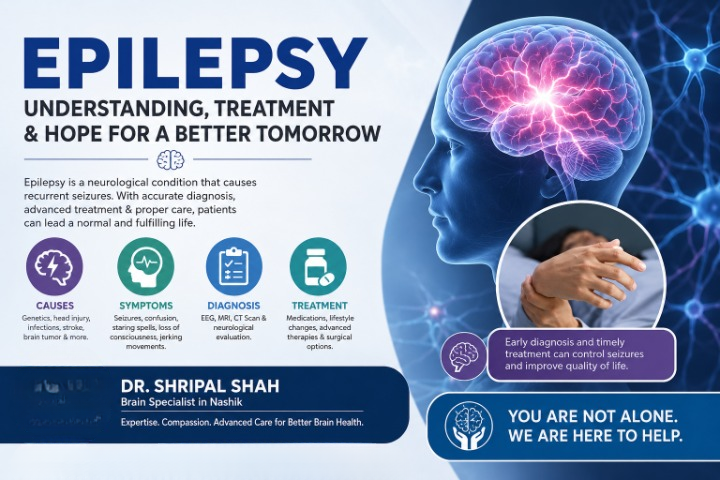
Epilepsy is a chronic neurological disorder that affects the normal electrical activity of the brain. It leads to recurrent, unprovoked seizures that can vary in intensity and duration. These seizures may appear as brief lapses in awareness, involuntary movements, or full-body convulsions.
According to Dr. Shripal Shah, a leading Brain Specialist in Nashik, early diagnosis and timely treatment play a crucial role in controlling epilepsy and improving a patient’s quality of life.
Epilepsy can affect people of all ages, but it is most commonly diagnosed in children and older adults. While the condition can seem alarming, modern medical advancements have made it highly manageable in most cases.
What Causes Epilepsy?
Epilepsy can develop due to various underlying reasons, and in some cases, the exact cause remains unknown. Some of the most common causes include:
- Genetic influence or family history of seizures
- Head injuries or brain trauma
- Brain infections such as meningitis or encephalitis
- Stroke or brain tumor
- Developmental disorders or birth complications
Dr. Shripal Shah emphasizes that identifying the root cause is essential for creating an effective treatment plan tailored to each patient.
Common Symptoms of Epilepsy
Epilepsy symptoms depend on the type of seizure and the area of the brain affected. Common symptoms include:
- Temporary confusion or loss of awareness
- Sudden uncontrollable jerking movements of arms or legs
- Staring spells
- Fear, anxiety, or a feeling of déjà vu
- Loss of consciousness
- Tingling sensations or unusual smell/taste perception
In some cases, seizures may last only a few seconds, while in others, they may extend longer and require immediate medical attention.
Types of Seizures
Epileptic seizures are broadly classified into two main categories:
1. Focal Seizures
These originate in one specific area of the brain. They may or may not affect awareness. Symptoms are usually localized, such as twitching in one part of the body.
2. Generalized Seizures
These affect both sides of the brain and often result in loss of consciousness. Common types include absence seizures and tonic-clonic seizures.
Proper classification helps Dr. Shripal Shah design a precise treatment strategy for better seizure control.
Diagnosis of Epilepsy
Diagnosis involves a combination of clinical evaluation and advanced tests. These may include:
- EEG (Electroencephalogram) to record brain activity
- MRI or CT scan to detect structural abnormalities
- Blood tests to rule out infections or metabolic causes
- Detailed neurological examination
Accurate diagnosis ensures that patients receive the right treatment without delay.
Treatment Options for Epilepsy
Epilepsy treatment focuses on controlling seizures and improving quality of life. Treatment options include:
1. Anti-Epileptic Medications
Most patients are managed effectively with medications that stabilize brain activity.
2. Lifestyle Modifications
Proper sleep, stress management, and avoiding seizure triggers are important.
3. Surgical Treatment
In severe cases where medication fails, surgery may be recommended to remove the affected brain area.
4. Advanced Neuro Care
Under the supervision of Dr. Shripal Shah, Brain Specialist in Nashik, patients receive personalized treatment plans using modern neurological approaches.
Living with Epilepsy
With proper treatment and care, individuals with epilepsy can lead normal and productive lives. Support from family, regular medication, and routine follow-ups are essential for long-term management.
Patients are encouraged to maintain a seizure diary and avoid triggers such as sleep deprivation, alcohol, and excessive stress.
When to Consult a Specialist
Immediate consultation with a neurologist is recommended if:
- Seizures occur repeatedly
- First-time seizure happens without known cause
- Seizures last more than 5 minutes
- Recovery after seizure is slow or incomplete
Early intervention from an expert like Dr. Shripal Shah ensures better control and reduces complications.
Conclusion
Epilepsy is a manageable neurological condition when diagnosed and treated early. With expert guidance from Dr. Shripal Shah, Brain Specialist in Nashik, patients can achieve effective seizure control and improved quality of life. Awareness, timely diagnosis, and consistent treatment remain the key pillars in managing epilepsy successfully.
Epilepsy is a neurological disorder that causes repeated seizures due to abnormal brain activity.
Common symptoms include seizures, staring spells, loss of consciousness, and uncontrolled body movements.
Epilepsy can be caused by brain injury, stroke, infections, genetic factors, or sometimes the exact cause is unknown.
Yes, epilepsy can often be managed with medications, lifestyle changes, and in some cases, surgery.
No, a single seizure does not always mean a person has epilepsy.
You should consult a neurologist if you experience repeated seizures or unexplained loss of consciousness.
Yes, epilepsy can affect people of all ages, including children and adults.
Doctors diagnose epilepsy using medical history, neurological examination, EEG, and brain imaging tests.
Yes, with proper treatment and regular follow-up, many people with epilepsy lead active and healthy lives.
Dr. Shripal Shah is an experienced neurologist who provides comprehensive evaluation and personalized epilepsy treatment in Nashik.