
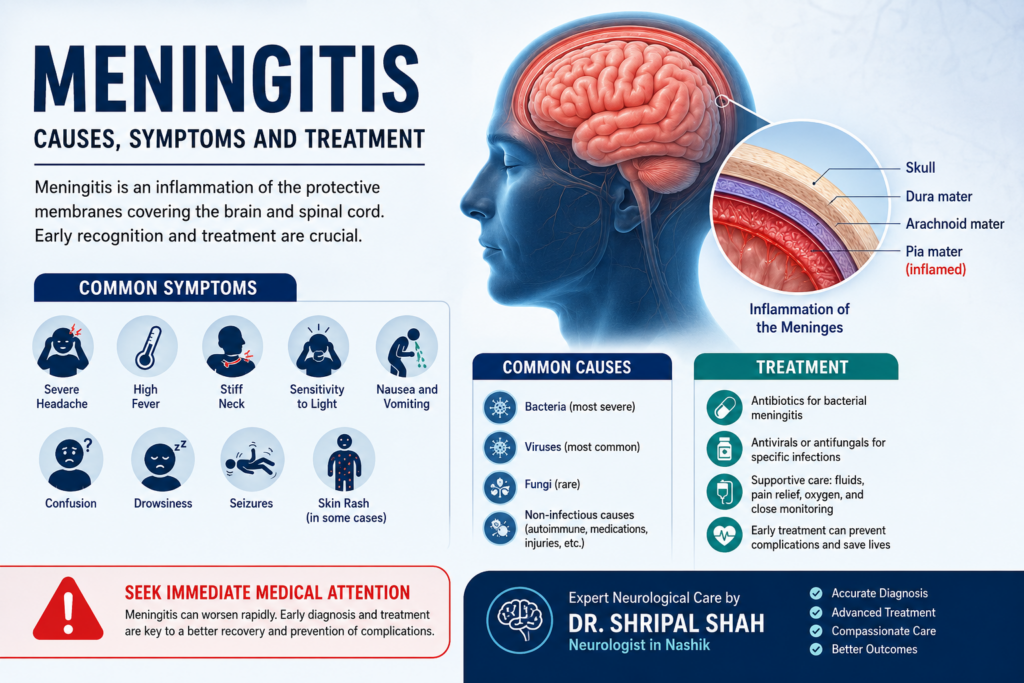
Meningitis is a serious medical condition that requires immediate attention. It causes inflammation of the protective membranes surrounding the brain and spinal cord, known as the meninges. If left untreated, meningitis can lead to severe complications, including brain damage, hearing loss, seizures, and even death. Early diagnosis and timely treatment play a crucial role in improving recovery outcomes.
At the clinic of Dr. Shripal Shah, a leading Neurologist in Nashik, patients receive comprehensive evaluation and management for neurological emergencies, including meningitis.
What is Meningitis?
Meningitis is an infection or inflammation of the meninges, the thin layers of tissue that cover the brain and spinal cord. The condition can affect people of all age groups, but infants, young children, older adults, and individuals with weakened immune systems are at a higher risk.
Depending on the underlying cause, meningitis can range from mild to life-threatening. Prompt medical care is essential to prevent long-term neurological complications.
Types of Meningitis
Several forms of meningitis exist, each caused by different microorganisms or conditions.
Bacterial Meningitis
Bacterial meningitis is the most severe type and requires urgent treatment with antibiotics. Common bacteria responsible for this infection include Streptococcus pneumoniae, Neisseria meningitidis, and Haemophilus influenzae. Without timely intervention, bacterial meningitis can rapidly become fatal.
Viral Meningitis
Viral meningitis is generally less severe and often resolves on its own. Viruses such as enteroviruses, herpes simplex virus, and mumps virus are frequent causes.
Fungal Meningitis
This uncommon form mainly affects individuals with weakened immune systems. Fungi present in the environment may spread to the brain and spinal cord through the bloodstream.
Non-Infectious Meningitis
Certain autoimmune diseases, cancers, medications, or head injuries can also trigger inflammation of the meninges without an infection.
Common Symptoms of Meningitis
Symptoms can develop suddenly or gradually depending on the cause. Some of the warning signs include:
- Severe headache
- High fever
- Stiff neck
- Sensitivity to light
- Nausea and vomiting
- Confusion or difficulty concentrating
- Excessive sleepiness
- Seizures
- Skin rash in some bacterial infections
Infants may present differently, showing symptoms such as irritability, poor feeding, persistent crying, vomiting, or a bulging soft spot on the head.
Causes and Risk Factors
Meningitis occurs when infectious organisms invade the bloodstream and reach the meninges. Several factors can increase the risk of developing meningitis, including:
- Not receiving recommended vaccinations
- Living in crowded environments
- A weakened immune system
- Chronic medical conditions
- Recent respiratory infections
- Exposure to infected individuals
Maintaining good hygiene practices and staying updated with vaccinations can significantly reduce the chances of infection.
How is Meningitis Diagnosed?
Early diagnosis is critical for effective treatment. Doctors may recommend several investigations to confirm meningitis and identify its cause.
Diagnostic tests commonly include:
- Physical and neurological examination
- Blood tests
- Brain imaging such as CT or MRI scans
- Lumbar puncture (spinal tap) to analyze cerebrospinal fluid
- Culture studies to identify bacteria, viruses, or fungi
Accurate diagnosis helps determine the most appropriate treatment strategy.
Treatment Options for Meningitis
Treatment depends on the type and severity of meningitis.
Bacterial meningitis is treated with intravenous antibiotics and supportive care. Antiviral medications may be prescribed for certain viral infections, while antifungal drugs are used for fungal meningitis.
Patients may also require:
- Intravenous fluids
- Pain relief medications
- Oxygen therapy
- Anti-seizure medicines
- Intensive monitoring in severe cases
Early medical intervention significantly improves recovery and reduces the risk of permanent neurological damage.
When Should You Consult a Neurologist?
Seek immediate medical attention if you or a loved one experiences sudden fever, severe headache, neck stiffness, confusion, or seizures. Delaying treatment can increase the risk of serious complications.
Dr. Shripal Shah, an experienced Neurologist in Nashik, provides expert assessment and advanced neurological care for patients with meningitis and other brain-related disorders. Timely consultation can help ensure proper diagnosis, effective treatment, and better long-term outcomes.
Conclusion
Meningitis is a potentially life-threatening condition, but early recognition and prompt treatment can make a significant difference. Understanding its symptoms, causes, and preventive measures helps individuals seek medical care without delay. If you notice warning signs suggestive of meningitis, consulting a qualified specialist at the earliest can help protect brain health and prevent serious complications.
Meningitis is an infection or inflammation of the protective membranes around the brain and spinal cord.
Common early symptoms include fever, severe headache, stiff neck, nausea, and sensitivity to light.
Meningitis can be caused by viruses, bacteria, fungi, or, rarely, parasites.
Yes. Bacterial meningitis requires immediate medical treatment to reduce the risk of serious complications.
Doctors may use a physical examination, blood tests, brain imaging, and a lumbar puncture (spinal tap) to diagnose meningitis.
Yes. Treatment depends on the cause and may include antibiotics, antiviral medicines, or supportive care.
Infants, older adults, people with weak immunity, and those with certain infections are at higher risk.
Many cases can be prevented through vaccination, good hygiene, and early treatment of infections.
Seek medical attention immediately if you have a high fever, severe headache, stiff neck, confusion, or seizures.
Dr. Shripal Shah is an experienced neurologist in Nashik who provides expert diagnosis and treatment for meningitis and other neurological disorders.