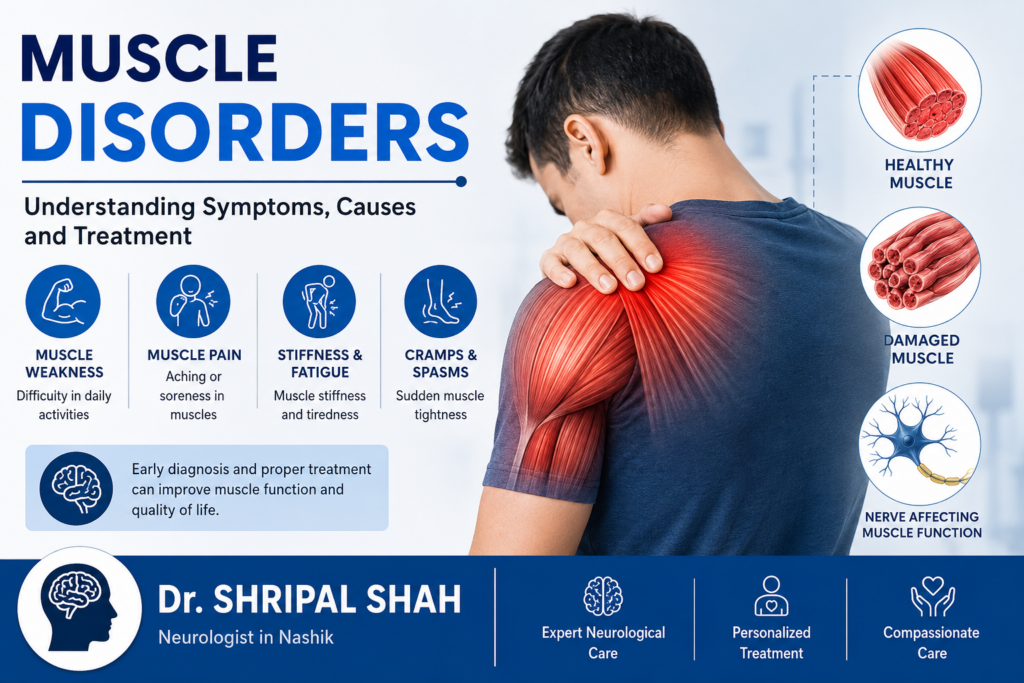
Muscles play a crucial role in every movement we make, from walking and lifting objects to breathing and maintaining posture. When muscles fail to function properly, it can significantly affect a person’s quality of life. Muscle disorders encompass a wide range of conditions that lead to muscle weakness, pain, stiffness, or loss of muscle function.
Dr. Shripal Shah, a leading Neurologist in Nashik, emphasizes that early identification and timely treatment can help manage many muscle disorders effectively and prevent complications.
What Are Muscle Disorders?
Muscle disorders are medical conditions that affect the structure, function, or control of muscles. These disorders may develop due to genetic abnormalities, autoimmune diseases, infections, metabolic problems, nerve damage, or injuries.
Some muscle disorders are temporary and treatable, while others are chronic conditions that require long-term management. Recognizing symptoms at an early stage is essential for improving outcomes and preserving muscle strength.
Common Types of Muscle Disorders
1. Muscular Dystrophy
Muscular dystrophy refers to a group of inherited disorders characterized by progressive muscle weakness and degeneration. Symptoms often begin during childhood, although some forms may appear later in life.
2. Myasthenia Gravis
Myasthenia gravis is an autoimmune condition in which the body’s immune system interferes with communication between nerves and muscles. This leads to muscle weakness that worsens with activity and improves with rest.
3. Inflammatory Myopathies
These conditions include polymyositis and dermatomyositis. They occur when the immune system attacks muscle tissues, causing inflammation, weakness, and fatigue.
4. Metabolic Muscle Diseases
Metabolic disorders affect how muscles produce and use energy. Patients may experience muscle cramps, exercise intolerance, and episodes of severe weakness.
5. Muscle Cramps and Spasms
Frequent muscle cramps and spasms can occur due to dehydration, electrolyte imbalance, medication side effects, or underlying neurological disorders.
Symptoms of Muscle Disorders
The symptoms of muscle disorders vary depending on the underlying cause. Some commonly reported signs include:
- Persistent muscle weakness
- Muscle pain or tenderness
- Difficulty climbing stairs
- Trouble lifting objects
- Frequent falls
- Muscle stiffness
- Fatigue after minimal activity
- Difficulty swallowing
- Drooping eyelids
- Muscle wasting
Individuals experiencing these symptoms should seek medical evaluation, especially if symptoms gradually worsen over time.
Causes of Muscle Disorders
Several factors can contribute to the development of muscle disorders, including:
- Genetic mutations
- Autoimmune diseases
- Viral infections
- Thyroid disorders
- Diabetes
- Vitamin deficiencies
- Certain medications
- Exposure to toxins
- Nerve injuries
- Chronic inflammatory conditions
Identifying the exact cause is important because treatment strategies differ based on the diagnosis.
How Are Muscle Disorders Diagnosed?
Diagnosing muscle disorders requires a detailed medical history, physical examination, and specialized investigations.
Diagnostic tests may include:
Blood Tests
Blood tests help detect elevated muscle enzymes, autoimmune markers, and metabolic abnormalities.
Electromyography (EMG)
EMG measures electrical activity within muscles and helps determine whether muscle weakness is related to muscle disease or nerve damage.
Nerve Conduction Studies
These tests evaluate how efficiently electrical signals travel through nerves.
Muscle Biopsy
A small sample of muscle tissue may be examined under a microscope to identify inflammation, degeneration, or inherited abnormalities.
Genetic Testing
Genetic testing can confirm inherited muscle diseases and guide family counseling.
Treatment Options for Muscle Disorders
Treatment depends on the specific disorder, its severity, and the patient’s overall health.
Common treatment approaches include:
- Medications to suppress abnormal immune responses
- Physical therapy to improve mobility and strength
- Occupational therapy for daily activities
- Nutritional support
- Pain management techniques
- Lifestyle modifications
- Surgical interventions in selected cases
Regular follow-up appointments are important to monitor disease progression and adjust treatment plans when necessary.
When Should You Consult a Specialist?
Persistent muscle weakness should never be ignored. Seeking expert neurological care can help identify the underlying condition and initiate timely treatment.
Dr. Shripal Shah, an experienced Neurologist in Nashik, provides comprehensive evaluation and management for patients suffering from various muscle disorders. Early diagnosis, personalized treatment plans, and ongoing rehabilitation can significantly improve functional abilities and overall well-being.
Conclusion
Muscle disorders can impact people of all ages and may interfere with everyday activities if left untreated. Understanding the symptoms, causes, and available treatment options empowers patients to seek medical attention promptly. If you notice unexplained muscle weakness, fatigue, or difficulty performing routine tasks, consulting a qualified specialist such as Dr. Shripal Shah can help ensure appropriate diagnosis and effective management.
Muscle disorders are conditions that affect the normal function and strength of muscles.
Muscle weakness, pain, cramps, stiffness, and fatigue are common symptoms.
They can be caused by genetic conditions, infections, autoimmune diseases, injuries, or certain medications.
You should see a doctor if muscle weakness is persistent, worsening, or affects daily activities.
Diagnosis may involve a physical examination, blood tests, EMG, MRI, or muscle biopsy.
Yes, treatment depends on the underlying cause and may include medications, physiotherapy, and lifestyle changes.
Yes, muscle disorders can occur in both children and adults.
In many cases, guided exercise and physiotherapy can improve muscle strength and mobility. .
No, some muscle disorders are temporary and treatable, while others require long-term management.
Dr. Shripal Shah provides expert evaluation, accurate diagnosis, and personalized treatment plans for various muscle disorders.