
Introduction
Spine disorders are among the most common health issues affecting people of all ages today. They can range from mild back pain to severe conditions that impact mobility, nerve function, and overall quality of life. In clinical practice, patients often consult specialists for chronic back pain, stiffness, or radiating pain in the arms and legs, which may indicate underlying spinal problems.
Even patients searching for a Stroke specialist in Nashik often present with overlapping neurological symptoms that require careful evaluation of spine and brain health together. Early diagnosis plays a crucial role in preventing long-term complications. Dr. Shripal Shah emphasizes a comprehensive neurological and spinal assessment approach to ensure accurate diagnosis and effective treatment planning for every patient.
What are Spine Disorders?
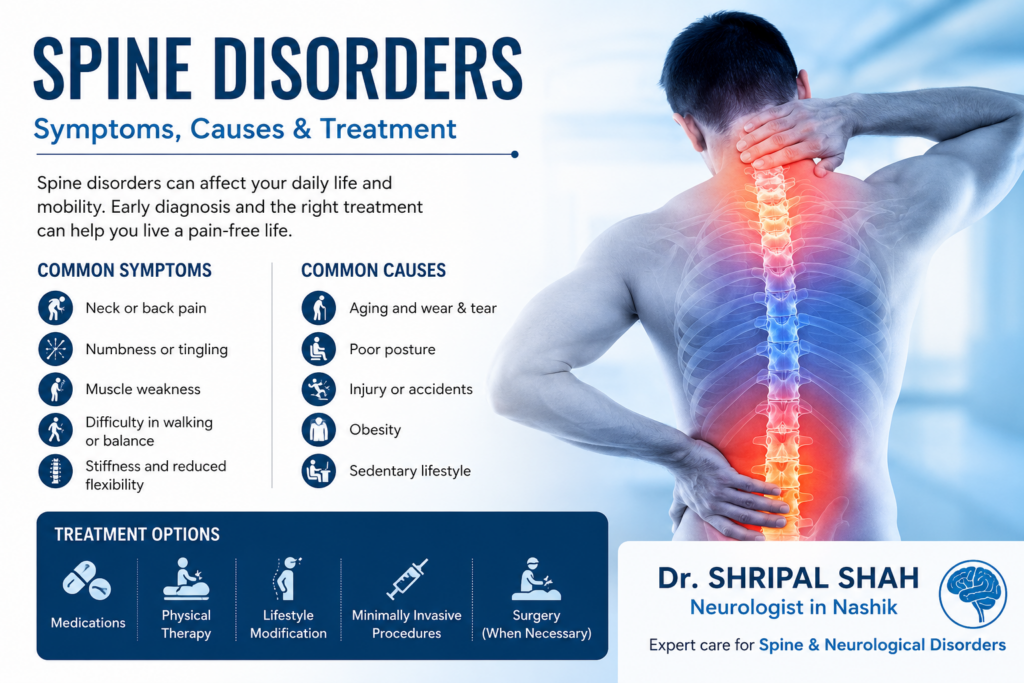
Spine disorders refer to medical conditions that affect the bones (vertebrae), discs, nerves, and supporting structures of the spinal column. The spine is responsible for supporting body structure, enabling movement, and protecting the spinal cord. Any damage or degeneration in this system can lead to pain, weakness, or neurological symptoms.
Common spine disorders include:
- Cervical spondylosis
- Lumbar disc herniation
- Sciatica
- Spinal stenosis
- Scoliosis
- Degenerative disc disease
Causes of Spine Disorders
Spine problems can develop due to various reasons, including lifestyle, age, and medical conditions. Understanding the root cause is essential for effective treatment.
Major causes include:
- Age-related degeneration of spinal discs
- Poor posture during sitting or working
- Sedentary lifestyle and lack of exercise
- Heavy lifting or repetitive strain injuries
- Obesity, which increases spinal pressure
- Trauma or accidents affecting the spine
- Genetic or congenital spinal abnormalities
In many cases, long-term neglect of early symptoms leads to worsening conditions that require advanced medical intervention.
Symptoms of Spine Disorders
Symptoms of spine disorders may vary depending on the affected region and severity of the condition.
Common symptoms include:
- Persistent back or neck pain
- Radiating pain in arms or legs
- Numbness or tingling sensation
- Muscle weakness
- Reduced flexibility and stiffness
- Difficulty in walking or maintaining posture
- In severe cases, loss of bladder or bowel control
If these symptoms persist, it is important to seek medical evaluation without delay.
Diagnosis of Spine Disorders
Accurate diagnosis is the foundation of effective treatment. Dr. Shripal Shah uses a detailed clinical and neurological evaluation to identify spine-related issues.
Diagnostic methods include:
- Physical and neurological examination
- X-rays of the spine
- MRI scans for soft tissue and disc evaluation
- CT scans for detailed bone structure analysis
- Nerve conduction studies in selected cases
These investigations help determine the exact cause and severity of the condition.
Treatment Options for Spine Disorders
Treatment depends on the type and stage of the spine disorder. Most cases can be managed with non-surgical methods, while severe conditions may require surgical intervention.
Treatment approaches include:
- Medications for pain and inflammation control
- Physiotherapy and posture correction exercises
- Lifestyle modifications and weight management
- Epidural steroid injections in selected cases
- Minimally invasive spine procedures
- Advanced spine surgery when necessary
Dr. Shripal Shah focuses on a patient-centric approach, prioritizing conservative management whenever possible before considering surgical options.
Prevention of Spine Disorders
Prevention plays a key role in maintaining spinal health. Simple lifestyle changes can significantly reduce the risk of spine problems.
Preventive measures include:
- Maintaining correct posture while sitting and standing
- Regular physical exercise and stretching
- Avoiding heavy lifting without proper technique
- Maintaining healthy body weight
- Taking frequent breaks during long sitting hours
- Using ergonomic furniture and support
When to Consult Dr. Shripal Shah
You should consult a specialist if you experience chronic back pain, radiating nerve pain, or any neurological symptoms affecting movement or sensation. Early consultation with Dr. Shripal Shah ensures timely diagnosis and prevents progression of spine disorders.
Common spine disorders include slipped disc, spinal stenosis, scoliosis, and degenerative disc disease.
Back pain, neck pain, numbness, tingling, and muscle weakness are common early symptoms.
Aging, poor posture, injuries, obesity, and disc degeneration are common causes.
Yes, many spine disorders improve with medication, physiotherapy, and lifestyle changes.
Consult a specialist if pain persists, worsens, or causes numbness or weakness.
Yes, poor posture can increase strain on the spine and contribute to chronic back pain.
Doctors may use a physical examination, X-rays, MRI, or CT scans to diagnose spine conditions.
Treatment depends on the condition and may include medication, physiotherapy, injections, or surgery.
Yes, regular exercise helps strengthen the back muscles and supports spinal health.
Dr. Shripal Shah offers expert evaluation and personalized treatment plans for a wide range of spine disorders.