
Introduction
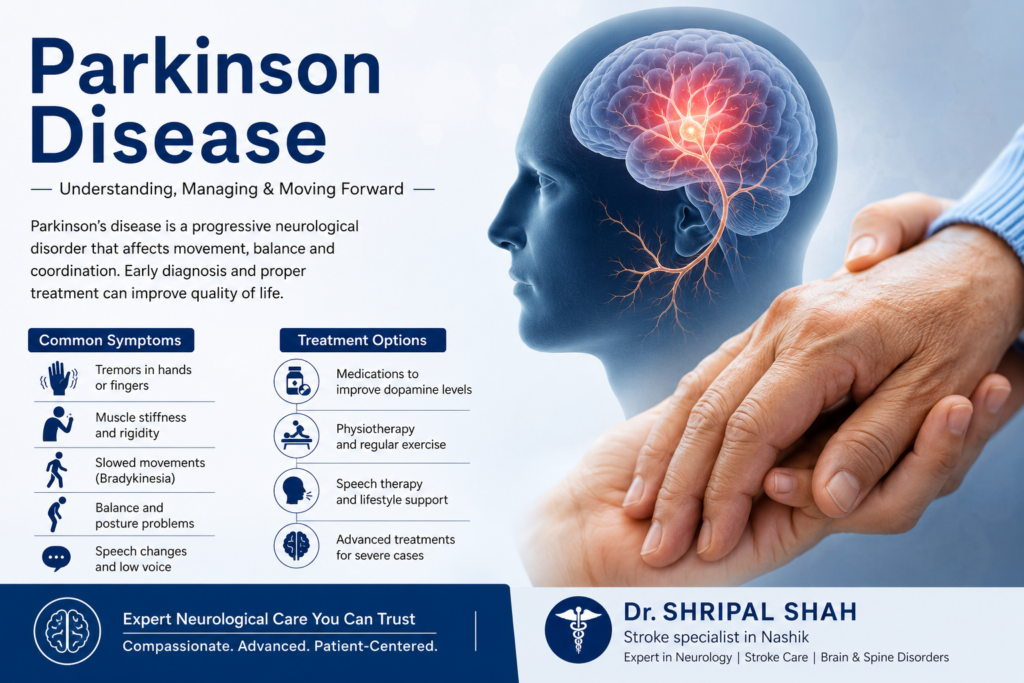
Parkinson disease is a progressive neurological disorder that affects movement, muscle control, and balance. It develops when nerve cells in the brain gradually stop producing dopamine, a chemical responsible for smooth and coordinated body movements. As dopamine levels decline, patients begin to experience tremors, stiffness, and difficulty in walking or performing daily activities.
Dr Shripal Shah emphasizes early diagnosis and timely neurological evaluation to slow disease progression and improve quality of life. With advanced neuro care and accurate assessment, patients can manage symptoms more effectively and maintain independence for longer periods.
What is Parkinson Disease?
Parkinson disease is a chronic brain condition that primarily affects the central nervous system. It usually progresses slowly over time and becomes more noticeable as symptoms worsen. While it is more common in older adults, it can also occur in younger individuals in rare cases.
The condition is not contagious or immediately life-threatening, but it significantly impacts daily functioning if not managed properly.
Causes of Parkinson Disease
The exact cause of Parkinson disease is still not fully understood. However, several factors are associated with its development:
- Loss of dopamine-producing nerve cells in the brain
- Genetic mutations in some patients
- Environmental exposure to toxins or pesticides
- Age-related degeneration of brain cells
- Family history of neurological disorders
Researchers continue to study why certain individuals develop Parkinson disease while others do not.
Early Signs and Symptoms
Recognizing early symptoms is crucial for timely treatment. Common signs include:
- Tremors in hands or fingers while resting
- Muscle stiffness and reduced flexibility
- Slowed movements (bradykinesia)
- Difficulty maintaining balance or posture
- Changes in handwriting (smaller or cramped writing)
- Soft or slurred speech
- Loss of facial expression
- Sleep disturbances and fatigue
These symptoms often begin mildly and gradually worsen over time.
Diagnosis of Parkinson Disease
Diagnosis is mainly clinical, based on symptoms and neurological examination. A neurologist may perform:
- Detailed medical history review
- Physical and neurological examination
- Brain imaging tests like MRI or CT scan (to rule out other conditions)
- Response assessment to Parkinson’s medications
Dr Shripal Shah, a Stroke specialist in Nashik, also evaluates complex neurological cases to differentiate Parkinson disease from other movement disorders and stroke-related complications.
Treatment Options
Although there is no permanent cure for Parkinson disease, treatment can significantly control symptoms and improve quality of life.
1. Medications
- Levodopa (most effective for symptom control)
- Dopamine agonists
- MAO-B inhibitors
- COMT inhibitors
2. Physiotherapy and Exercise
Regular physical activity helps improve balance, flexibility, and muscle strength.
3. Speech Therapy
Helps patients improve voice clarity and communication skills.
4. Surgical Treatment
In advanced cases, Deep Brain Stimulation (DBS) may be recommended to control severe symptoms.
Lifestyle Management
Patients with Parkinson disease can benefit from simple lifestyle changes:
- Regular exercise like walking or yoga
- Balanced diet rich in fiber and antioxidants
- Adequate sleep and stress management
- Avoiding smoking and alcohol
- Regular follow-ups with a neurologist
Family support also plays a key role in managing emotional and physical challenges.
Why Early Treatment Matters
Early intervention helps slow disease progression and improves response to medication. Patients who start treatment early often maintain better mobility and independence compared to those diagnosed at later stages.
Dr Shripal Shah focuses on early neurological screening and comprehensive care plans tailored to each patient’s condition.
Conclusion
Parkinson disease is a long-term neurological condition that requires continuous care and medical supervision. While it cannot be fully cured, modern treatment approaches can effectively control symptoms and improve quality of life.
If you or your loved one experiences early signs of movement difficulty, tremors, or balance issues, consulting a specialist is essential. With expert guidance from Dr Shripal Shah, patients can receive accurate diagnosis, advanced treatment options, and long-term neurological care.
Parkinson's disease is a progressive neurological disorder that affects movement.
Early symptoms include tremors, slow movement, muscle stiffness, and balance problems.
It is mainly caused by the loss of dopamine-producing nerve cells in the brain.
Older adults, men, and people with a family history are at higher risk.
No, but medications and advanced treatments can help manage symptoms.
It is diagnosed through a neurological examination, medical history, and imaging tests when needed.
Surgery may be advised when medications no longer provide adequate symptom control.
Yes, regular exercise can improve mobility, balance, and overall quality of life.
Treatment may include medications, physiotherapy, speech therapy, and Deep Brain Stimulation (DBS).
Dr. Shripal Shah offers comprehensive evaluation and personalized treatment plans for patients with Parkinson's disease.
Parkinson's disease is a progressive neurological disorder that affects movement.
Early symptoms include tremors, slow movement, muscle stiffness, and balance problems.
It is mainly caused by the loss of dopamine-producing nerve cells in the brain.
Older adults, men, and people with a family history are at higher risk.
No, but medications and advanced treatments can help manage symptoms.
It is diagnosed through a neurological examination, medical history, and imaging tests when needed
Surgery may be advised when medications no longer provide adequate symptom control.
Yes, regular exercise can improve mobility, balance, and overall quality of life.
Treatment may include medications, physiotherapy, speech therapy, and Deep Brain Stimulation (DBS).
Dr. Shripal Shah offers comprehensive evaluation and personalized treatment plans for patients with Parkinson's disease.